Kakemono Part 1
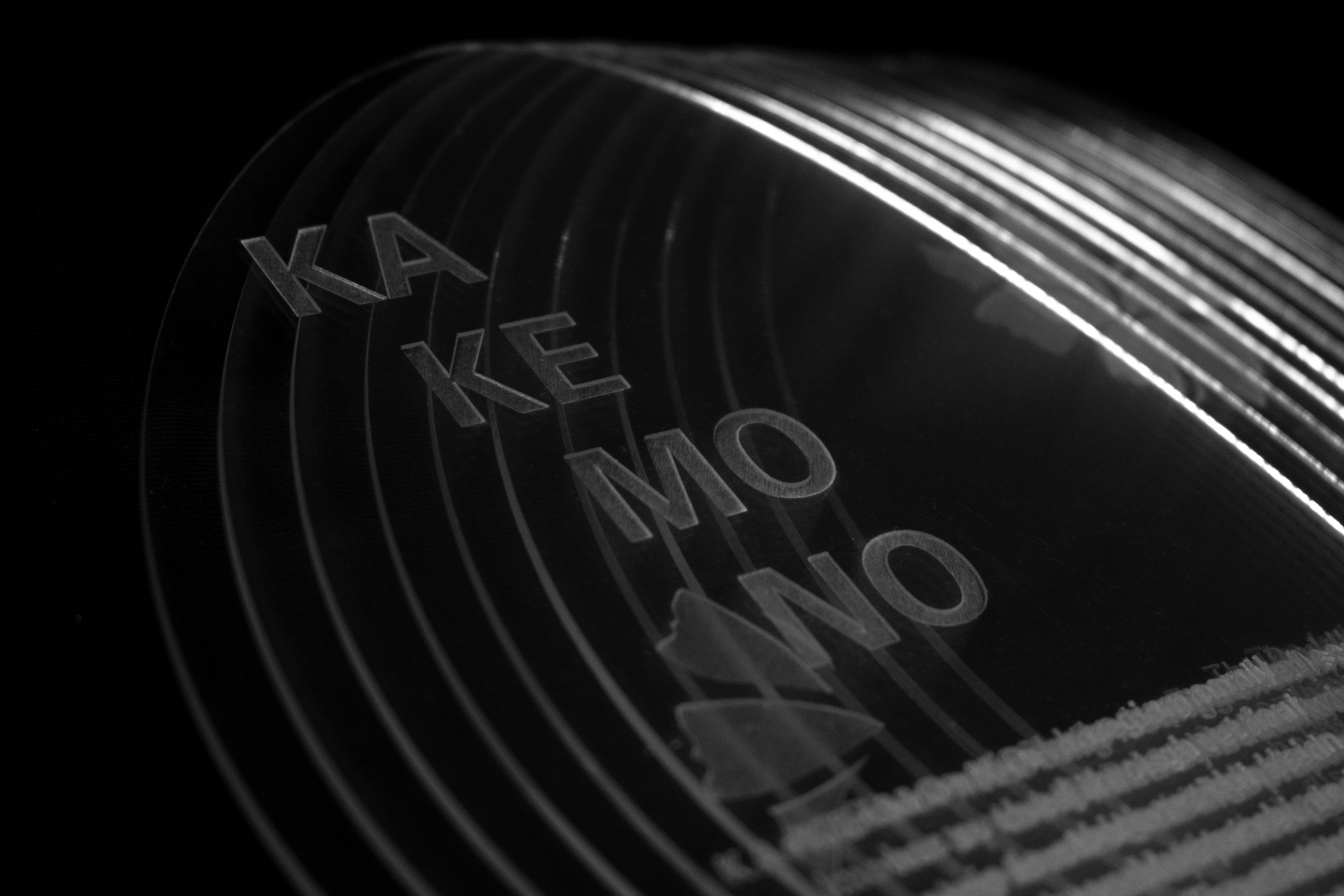

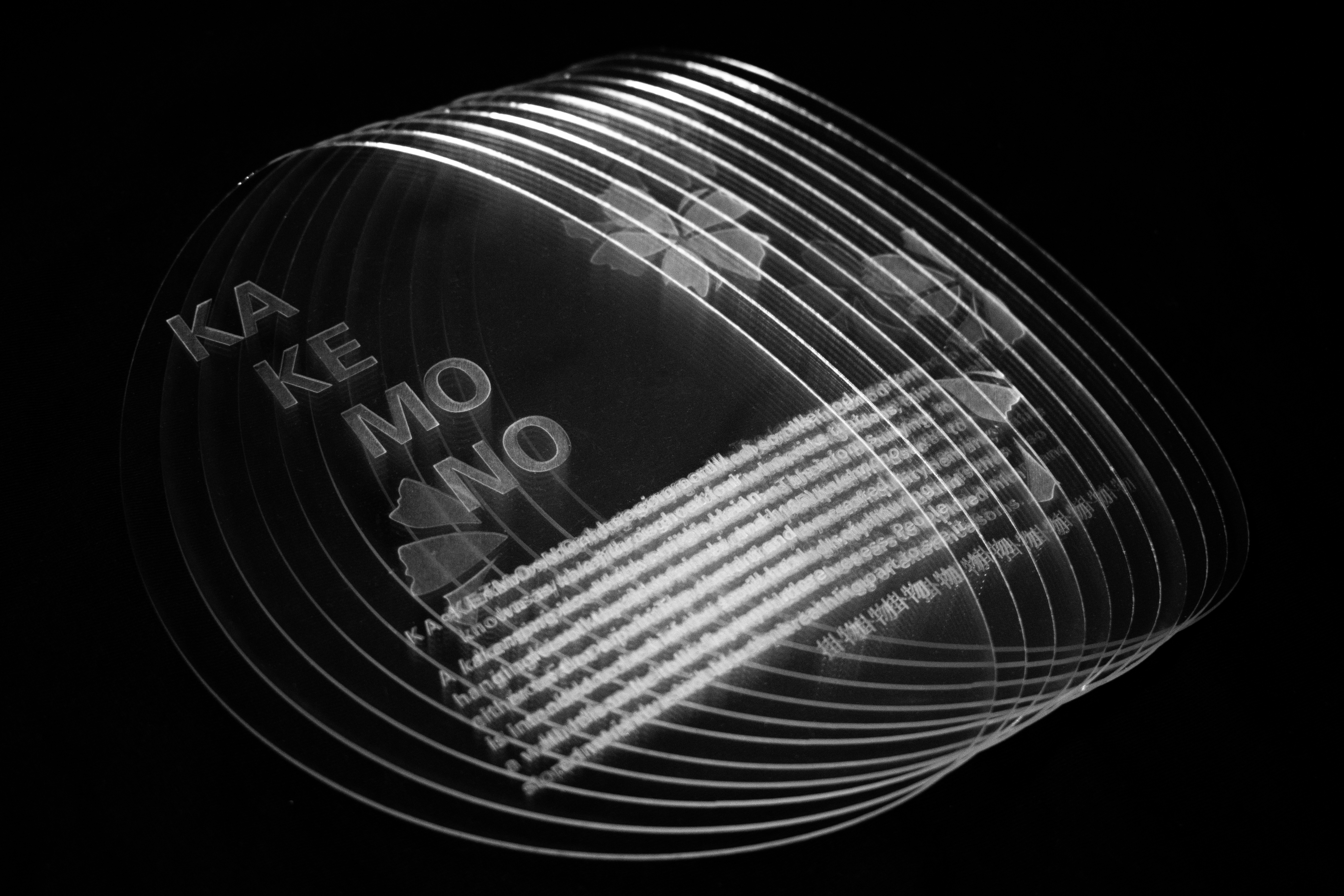


Kakemono Part 1:
2D Reinterpretation
Adobe Illustrator | Laser Rasterizing | Laser Cutting
Year: 2020
Dimension: 4 x 8 Inches (per sheet)
Material: Acrylic Sheets
Course: Graphic Design 4
Project Timeframe: 3 Weeks
Project Challenge: To break down the kakemono into different components and reimagine it into a new two-dimensional contemporary form.
In Japanese culture, a kakemono is a long vertical traditional scroll temporarily displayed on walls for ceremonial and/or decorative purposes for contemplation.
The kakemono was first used by Buddhist monks during the Heian Period (794 to 1185 CE) to preserve sacred calligraphic works that embodied the Buddhist ideology of impermanence and minimalism.
Traditionally, a kakemono was created by adhering multiple layers of silk sheets together, a process that still allows the scroll to be easily disassembled for restoration as it deteriorates over time.
In this project, the kakemono was deconstructed and reimagined as multiple layers of acrylic sheets, emphasizing the beauty of impermanence, a central theme in Zen Buddhism. This theme is also reflected within Zen gardens where natural elements are designed to change over time. Hence, the organic form of the acrylic sheets to reinterpret these natural elements in contemporary material.
2D Process Work


Initially, the structure was intended to stand upright or to be hung like a traditional kakemono. However, allowing the eleven flat acrylic sheets sit on top of one another strengthened its association with Zen gardens where the design of the garden is changed over time by different people who rake it. Several shapes were explored to represent the organic stones from Zen gardens.
Kakemono Part 2

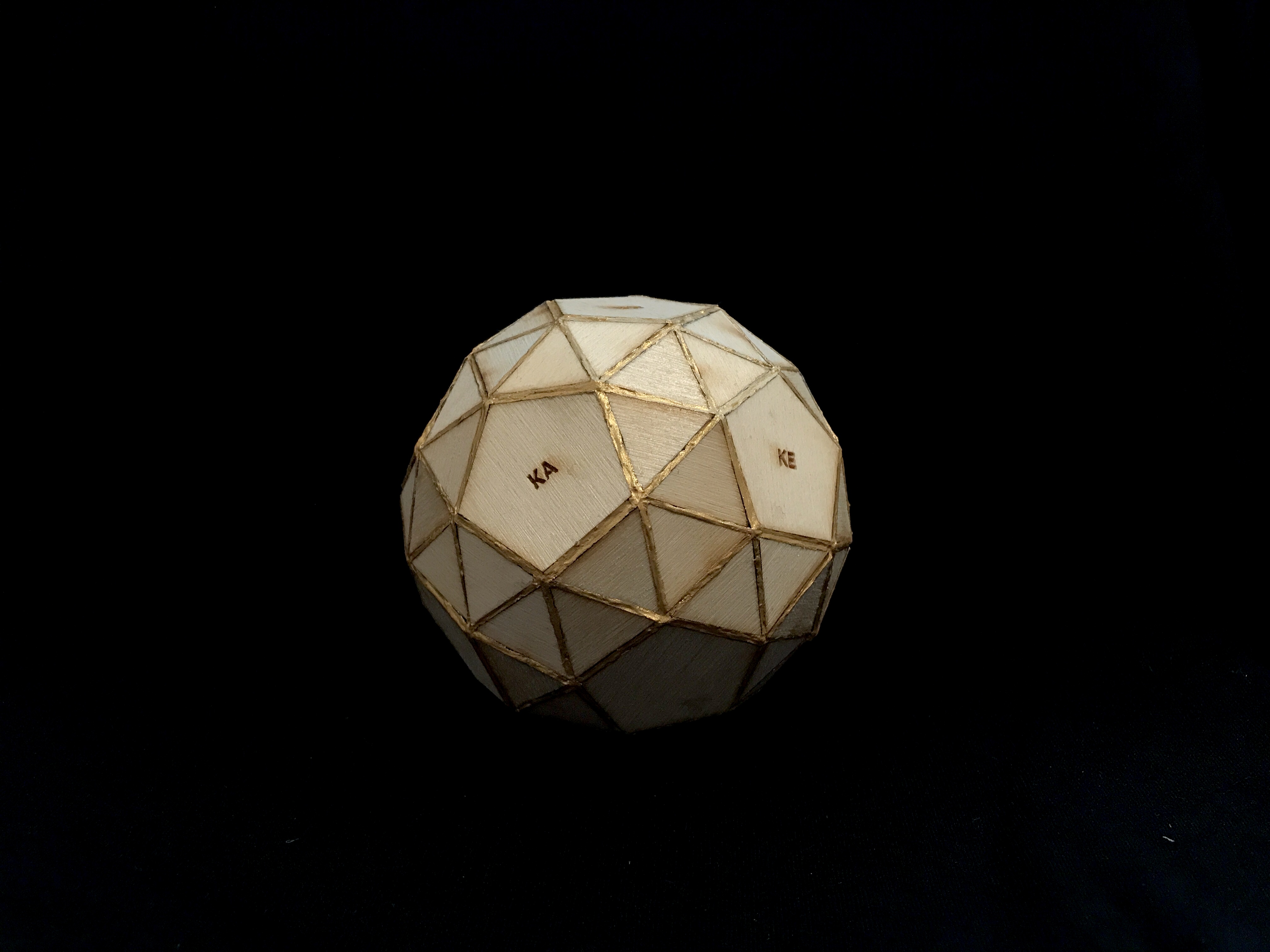
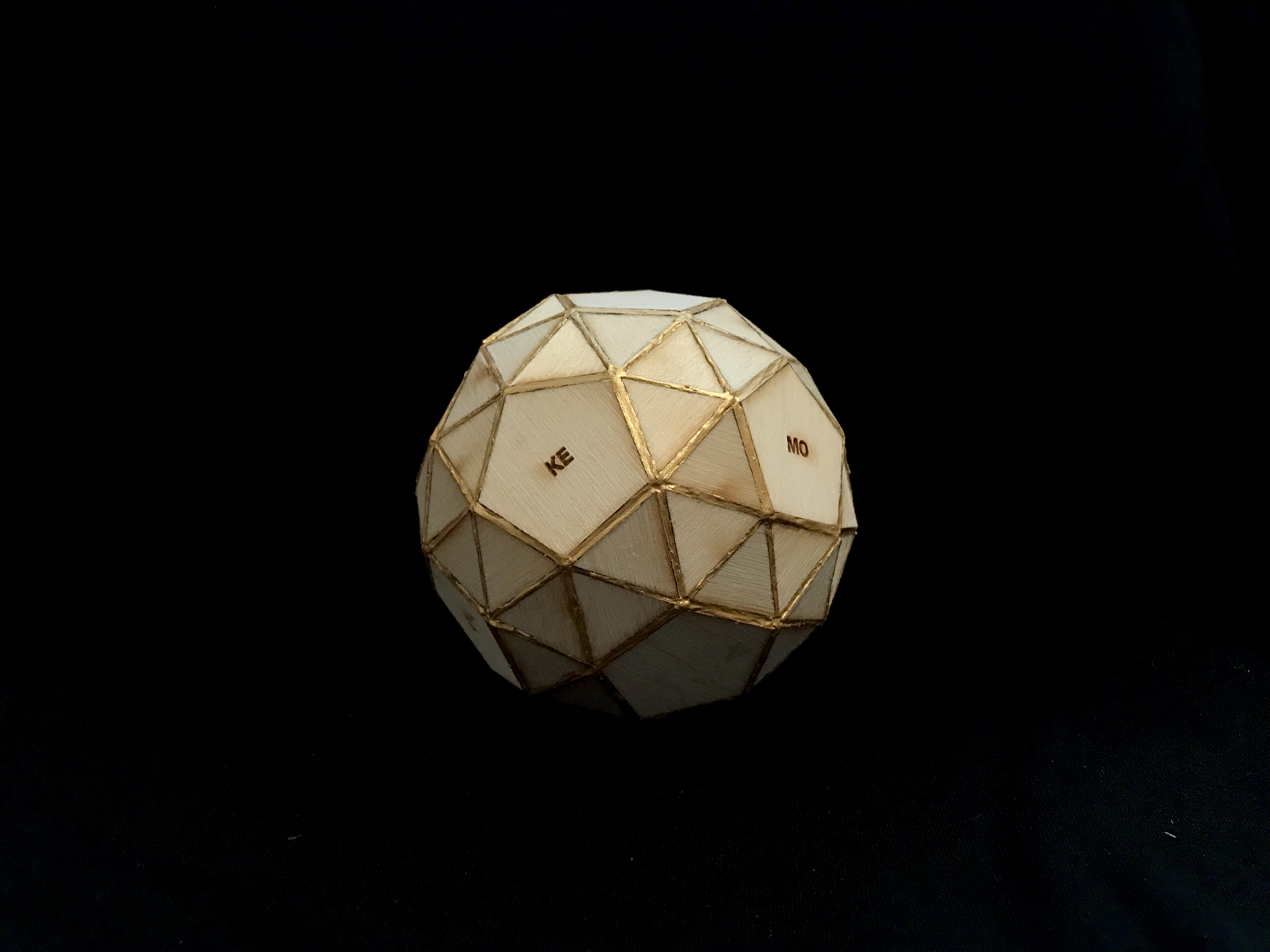
Kakemono Part 2:
3D Reinterpretation
Adobe Illustrator | Laser Rasterizing | Laser Cutting
Year: 2020
Dimension: 3.5 x 3.5 x 3.5 Inches
Materials: Baltic Birchwood, 3D Glue, Gold Paint
Course: Graphic Design 4
Project Timeframe: 3 Weeks
Project Challenge: To break down the kakemono into different components and reimagine it into a new three-dimensional contemporary form.
A kakemono is a long vertical Japanese scroll displayed for ceremonial and/or decorative purposes for contemplation in Zen Buddhism during the Heian Period (794 to 1185 CE).
Traditionally, the kakemono is divided into several distinct sections labelled as Heaven and Earth. Heaven is associated with reincarnation and the path toward enlightenment, representing the purification of the soul. The Zen Buddhist philosophy of wabi-sabi guides individuals toward enlightenment by encouraging them to find beauty in imperfection as perfection does not exist in the natural world.
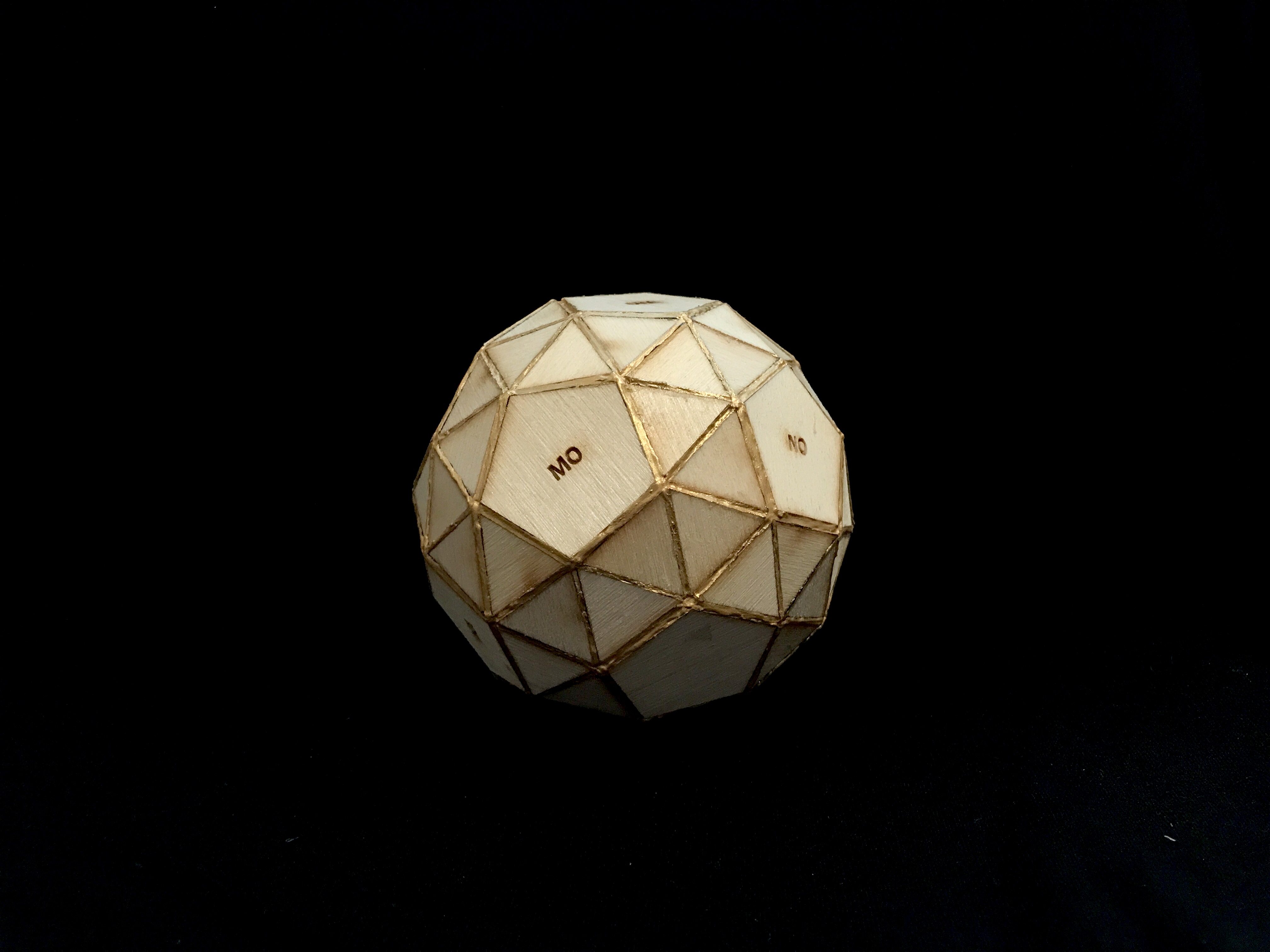
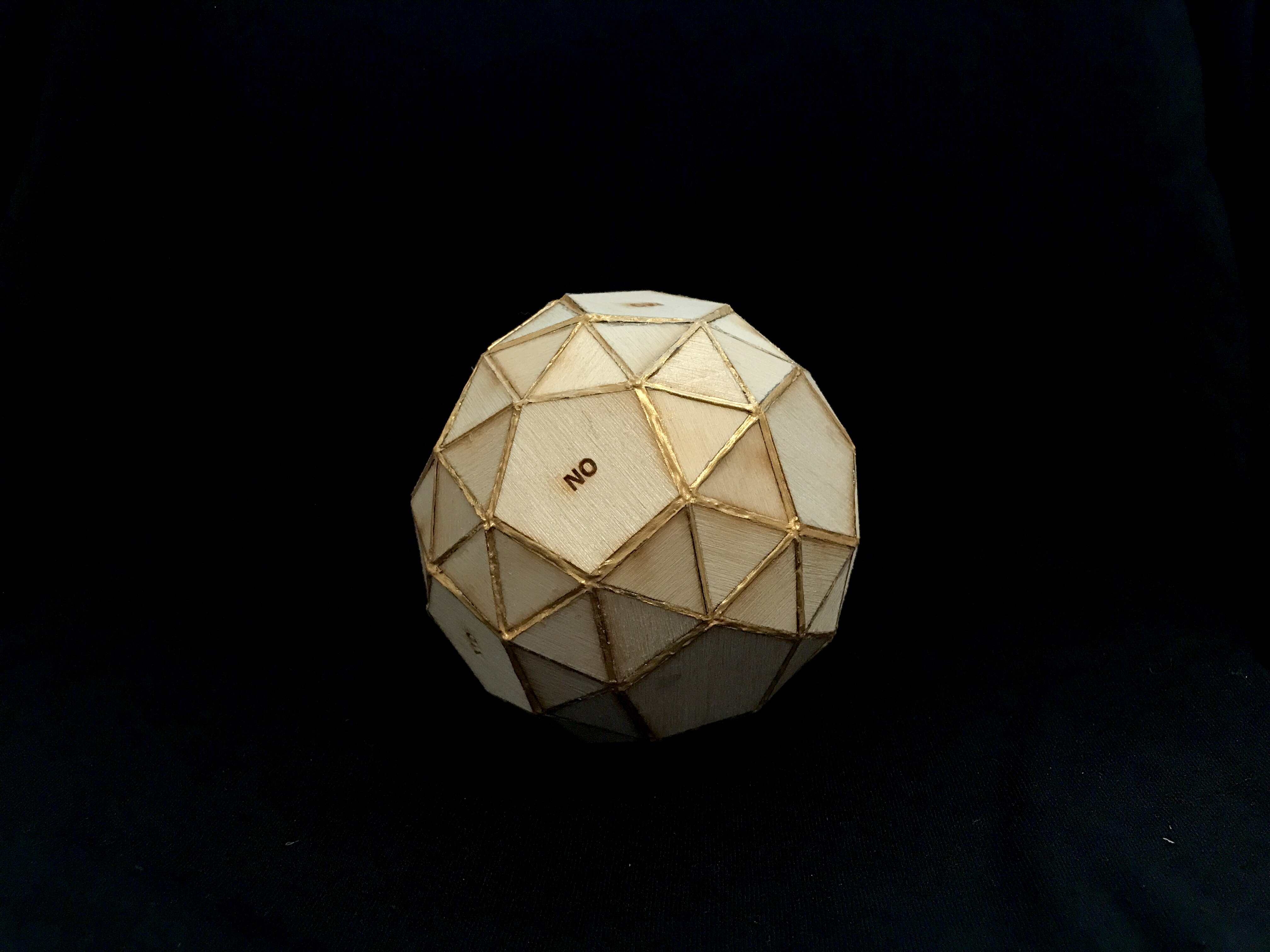
Wabi-sabi is also commonly demonstrated through kintsugi where broken ceramics are repaired by highlighting different points of breakage with golden lacquer. This principle of embracing imperfection is reflected in contemporary terms through a snub dodecahedron, whose irregular form prevents it from easily rolling from one point to another, unlike a sphere.
Additionally, small bells were often attached to a traditional kakemono to ward off birds that may perch on it. In the reimagined prototype, a small bell was placed inside the snub dodecahedron, which made a sound when rolled.
3D Process Work


Although various colour schemes were applied to the snub dodecahedron prototypes, the final chosen representation of kakemono was the unpainted baltic birchwood.